
Michigan's chilling "Missing Hunters" murders turn 40 this weekend
How a two-decade-old urban legend mystery was unraveled by a relentless cop, badass prosecutor and terrified eyewitness

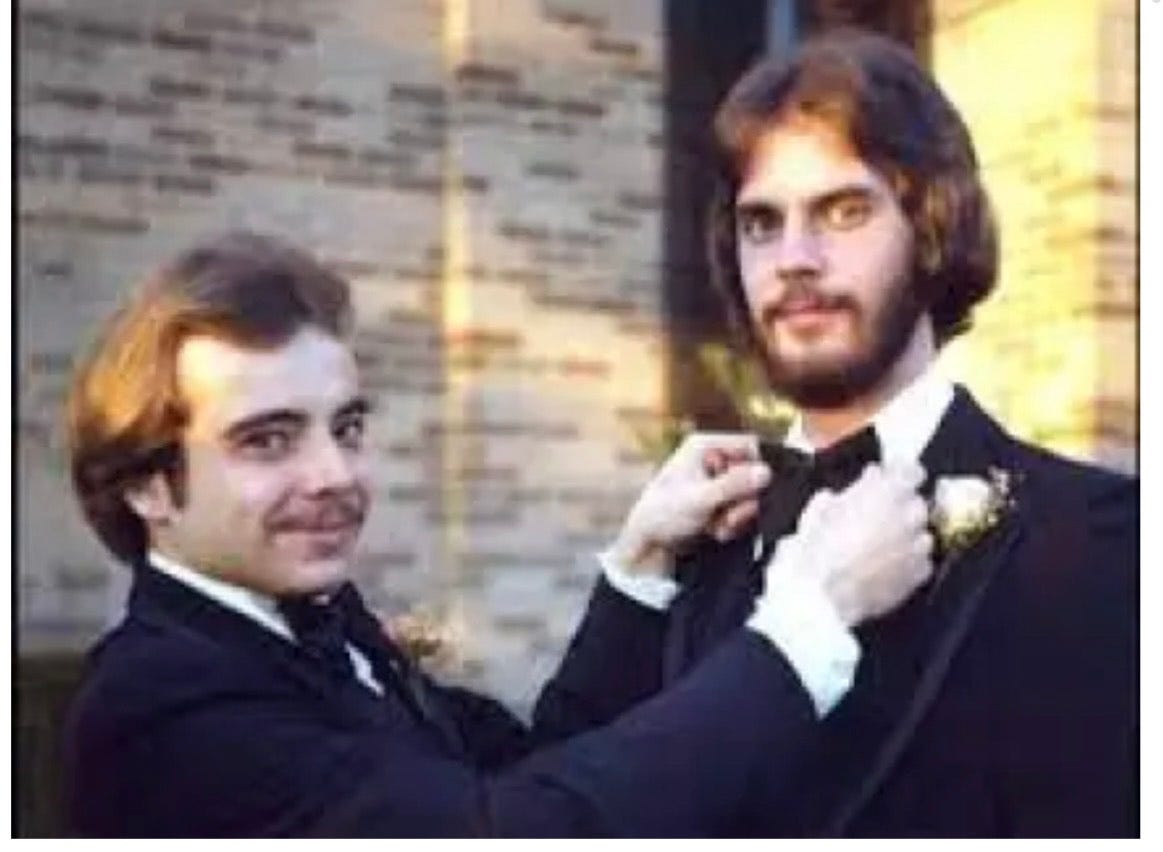
Forty years ago tonight (Friday), one of Michigan’s most chilling, gruesome and compelling true-crime mysteries began unfolding unremarkably: Two buddies tossed their guns and gear into a truck and headed north during Michigan’s storied firearm deer season. The plan: Hang with some friends during the second weekend of the two-week season, drink heavily, have some fun and maybe, as an afterthought, bag a buck.
No one has seen David Tyll, Brian Ognjan, their truck, guns or gear since.
The exhaustive years-long search focused on the Mio, Michigan area where the pair were last reliably seen, drunk and carousing at various bars. It would grow to include SCUBA dive teams, aerial overflights, ground-penetrating radar, law agencies from every level of government, thousands of tips from the plausible to the insane, the assistance of psychics, cadaver dogs, the resources of Interpol, and thousands of hikers, hunters, trail riders, birdwatchers, anglers and others all keeping their eyes open as they walked through the woods of Northern Michigan.
In Roscommon — where I was only several months into my first grown-up job as the sole reporter at the weekly Herald-News (may it R.I.P.) — it was all anyone could talk about. Roscommon was near the places they were last reliably seen. A buddy of theirs from Roscommon was given a lie detector test. A property just outside the village was searched. Every store window had their picture and every deer hunter, hiker, angler and local knew to look out for the men and their black Ford Bronco. I rode and flew with DNR conservation officers as they scoured the two-tracks and cedar tangles for any sign of the missing men or truck.
The pair weren’t the type to skip town, or even to come home late without calling. Ognan was a mechanic and was saving money with plans to propose to his girlfriend; Tyll was a machinist, recently married. Both were punctual employees. Raise some hell in a bar? Drink too much? Do stupid guy stuff? Sure. But not show up for work Monday morning without any contact? The families knew immediately something was very wrong.
Updates gradually grew less and less hopeful. The story faded from the front pages of the daily papers, then from the headlines altogether. Yet for years afterward, law enforcement, the men’s families, and journalists would publish appeals every November for Michigan’s 700,000 deer hunters to be on the lookout for anything suspicious as they fanned into the forests. The case was featured on the Unsolved Mysteries TV show and other sensational broadcasts. Every couple of years a new burst of publicity or an increase in the reward would generate a new flood of tips and increasingly bizarre theories.
Police begged the public for anything … any scrap of a clue … no matter how small. Something. Anything. Because they had nothing.
When I moved on from Roscommon to newspaper jobs in Grand Rapids and Detroit I continued to write about the mystery on the eve of every deer season. I checked in with State Police and with the men’s families. I thought about them every time I was in the woods near the places they might have been. When I snorkeled remote ponds I’d envision coming upon a Ford Bronco bumper. One year the State Police — perhaps thinking it couldn’t hurt — laid out their entire tranche of files on the case for me and let me paw through them for a story. Among the numerous leads and intriguing pieces of evidence in those files was mention of a group of brothers who’d been questioned, and who were not entirely cooperative. I mentioned them briefly in the story I wrote after reviewing the files. If I only knew then….
Urban Legend Grows
The missing hunters, both 27, became the stuff of urban legend and endless speculation. Were they, and the Bronco the drove, at the bottom of a lake? Were they secret gay lovers who skipped the country? Did they run off with women? Get involved in drugs? Aliens? Bigfoot?
For 18 years the mystery tormented the families, frustrated law enforcement, and tugged at me and many others. What happened?
May 14, 2003: It was sheer coincidence that I was filling in on a rare night editing shift at the Detroit Free Press when the call rang through after first edition deadline. It was Stu Sandler from Attorney General Mike Cox’s office. He knew I’d followed the story for years. Two men had been charged with the hunters’ murders and would be arraigned in the morning, he said. Thought I’d be interested.
INTERESTED??!!
I nearly lost my mind. You know in the movies when they yell, “Stop the Presses!”? It wasn’t exactly like that, but as close as I ever came. We hastily reorganized the front page of the State section and broke the story of the arrests in the late editions.
Later that year two brothers, Raymond (J.R.) and Donald (Coco) Duvall, would be convicted of the murders by world-class prosecutor Donna Pendergast during chillingly surreal court testimony that shone a light on a band of violent, lawless brothers who laughed as they beat the hunters’ brains out with baseball bats in a cold, dark field in Michigan’s north woods as the men begged for their lives.
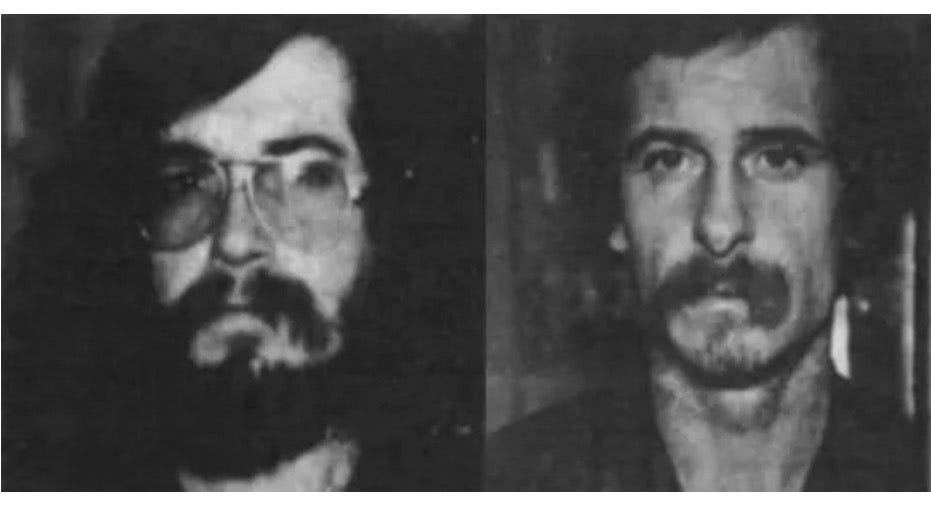
Investigators knew the brothers bragged about the killings over the years, implying they fed the bodies and bones to pigs. Once in a bar in Wixom. Once to an ex-wife. Once to a girlfriend. And several other such instances. But the secondhand boasts weren’t enough to bring murder charges in a case with no eyewitness nor a shred of physical evidence. The murderers were part of a band of seven brawling, sociopathic brothers whose fearsome reputation was well known among locals in the Mio/Luzerne/Glennie area who steered clear of them. Even police avoided interactions with the Duvalls unless absolutely necessary…there would always be trouble.
The cop who wouldn’t quit
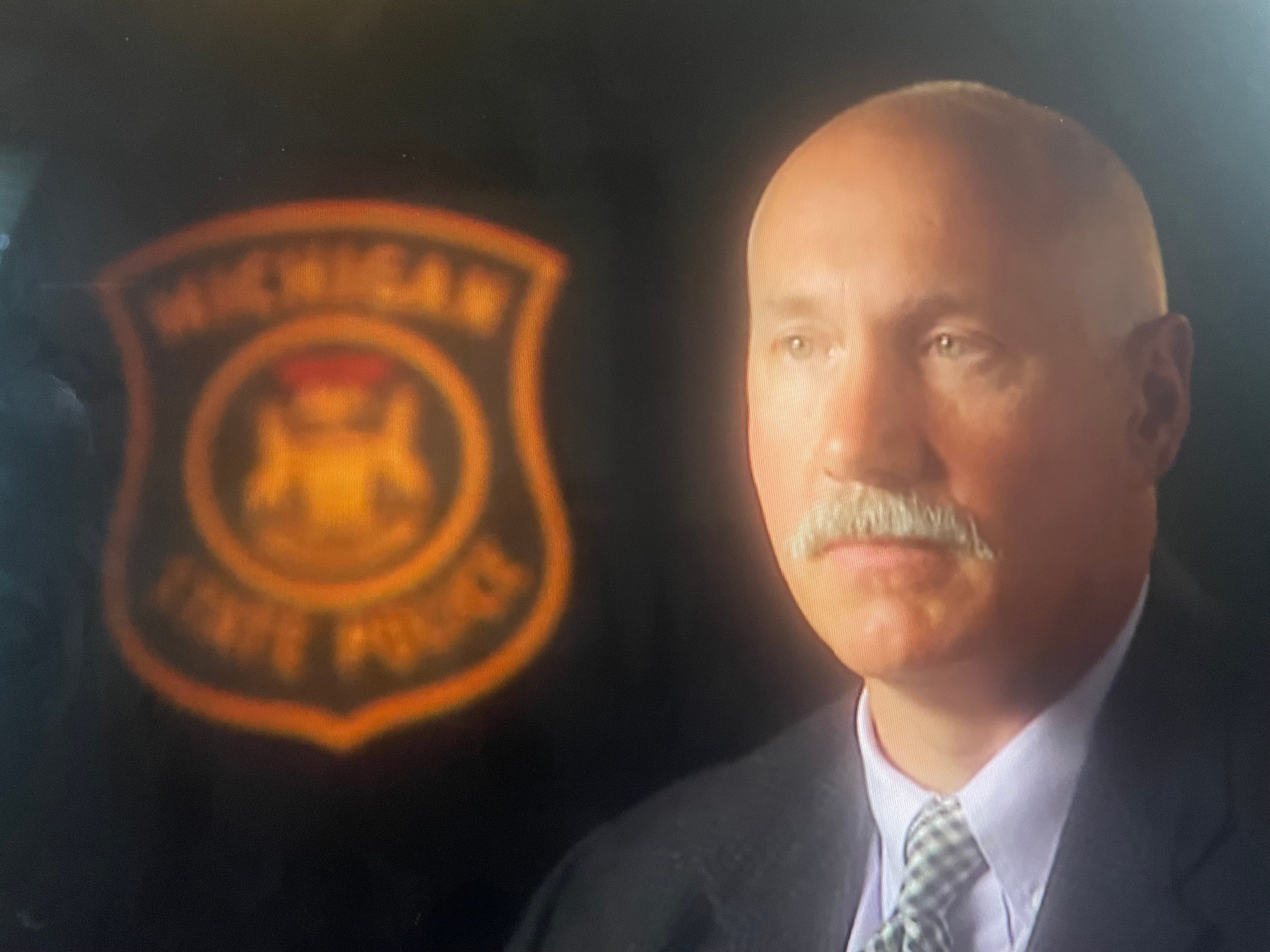
Fearful witnesses and scant solid evidence greeted State Police Detective Robert Lesneski when he inherited the cold case more than 15 years later. Known by his nickname, Bronco, Lesneski was obsessive, working hundreds of hours on his own time. Reinterviewing old witnesses, coding and organizing the colossal mess of paper files. Stopping by the side of the road to poke his shovel into a suspicious hunk of metal. He always carried a shovel in his trunk.
New tips occasionally trickled in and he chased those too.
One tipster told Bronco that she knew of a woman who knew something about the hunters’ disappearance. The woman lived near a bar, Linkers Lost Creek Lodge in Luzerne, where the hunters were seen playing pool and harassing the waitresses. Barb Boudro was the woman’s name. Lacking an address, Bronco began knocking on random doors near the bar after his shifts ended. For days.
“Are you Barb Boudro? No? Do you happen to know where she lives? No? Sorry for your trouble.” Rinse, repeat.
The tip seemed destined for the hundreds before it: A dead end. But Bronco wasn’t one to leave any loose end unknotted. One more door. Then one more after that. And another. And one more as light was fading…a woman cautiously cracked her door. “Hello, I’m Detective Lesneski from the Michigan State Police and I was wondering….”
“The woman flinched. She started shaking uncontrollably, so strongly it seemed as if she might be having an epileptic fit,” recounted Tom Henderson in his highly-readable book Darker Than Night. “‘You’re going to get me killed,’ she said, pushing the door shut.”
Bronco’s adrenaline surged. “‘I just about fell over’” he told Henderson. “‘I knew then I absolutely had something.’ For the first time in his career, he literally stuck his foot in the doorway, blocking the door just before it closed.”
Boudro didn’t tell him much that first visit. But over the course of months, he continued to stop by, befriending her, helping her with household chores and beginning to get details of what she knew.
She told Bronco that her friend Ronnie Emery was with her at Linkers bar the night the hunters were there. The brothers had a verbal altercation with a couple of the Duvalls, who’d called in friends and other brothers who began arriving at the bar. The Duvalls bought a six-pack for Barb and Ronnie and suggested they go home because there was going to be trouble.
Barb and Ronnie went back to Barb’s house just down the road and settled in to watch Scarface on video. Ronnie went outside to check out a commotion, Barb said. When he returned, he told a terrifying story of the hunters, illuminated by truck headlights and begging for their lives, as the brothers broke their skulls with baseball bats, laughing.
Moments later there was a knock at the door. “You didn’t see anything. Pigs gotta eat too,” one of the brothers warned them cryptically. She’d been living in fear ever since.
Boudro was a recovering alcoholic who’d lived a hardscrabble life. But she was no dummy. Bronco knew Barb had witnessed the murder, and that she was protecting herself by telling the story through Ronnie’s eyes. Ronnie died years earlier, so Barb’s story was secondhand hearsay — not admissible in court.
As long as she continued to tell the story through Ronnie’s eyes, she couldn’t be compelled to testify. And she had good reason.
Like the movie Deliverance, but true
The seven Duvall brothers were a feral crew of hard-drinking brawlers with little regard for laws or social norms. They split time between Monroe, Michigan and the woods surrounding Mio, Michigan. In the small communities dotting the pine forests near Mio their fearsome reputation was widely known. Police actively avoided interacting with the brothers unless absolutely necessary, and with lots of backup when they did. Locals knew never to offer the slightest provocation, or you might find yourself with a broken nose and two black eyes. Farmers occasionally found one of their cows shot and butchered right in their fields courtesy of the Duvalls. They wouldn’t report it. Just the cost of doing business around the brothers.
I interviewed a DNR conservation officer who frequently clashed with them over poaching violations. Invariably, their encounters took place far from backup, alongside remote streams or in hunting camps. He told me he’d always tell his partner to stand back some distance and keep his hand near his weapon whenever they interacted with the Duvalls.
When asked what he did for a living, one of the Duvalls told a reporter, “Firewood and welfare.”
As a former girlfriend of one of the J.R.’s sons told investigators, the brothers were unpredictably violent toward strangers, each other, and their wives and girlfriends. Women with black eyes and busted lips were routine sights.
“If you’re a Duvall woman, you get beat up a lot,” the ex-girlfriend told police. “That’s the way all the boys treated their women.”
The most common comparisons made of the brothers was that they resembled the savage backwoods hillbillies depicted in the book and movie Deliverance. Times three.
Barb lived in constant fear. The brothers would stop by every year or so to remind her to keep her mouth shut, she told Bronco. They mentioned how pretty her granddaughter was, sneering. Over time, one of her dogs was shot. Another was run over in her front yard — the vehicle having intentionally left the road to strike the animal. The fear was palpable, and Bronco was careful to drive only unmarked cars to her home and even installed a camera for her protection.
A Hail Mary
By 2002 Bronco had a good idea what happened, but not enough to make an arrest. In concert with the Michigan Attorney General’s Office, they issued investigative subpoenas to Barb Boudro and several other witnesses who were compelled to come to Lansing and testify under oath. Attorney General Cox at the time called it a “poor man’s jury.” It was their Hail Mary, hoping to shake something loose.
Barb Boudro was first to testify, and she continued telling the story through Ronnie’s eyes — the shouting, the beatings, the blood, the blows continuing to rain down on the crumpled hunters long after they were motionless. Still, none of it was admissible in court.
From Henderson’s Darker Than Night account: “All of them (investigators) were getting frustrated. It was clear she was holding something back.” Bronco shut off the tape recorder and leaned forward inches from Barb’s face. He begged her to tell what she knew.
“Something changed in her eyes and her face, something subliminal, some small hint of acceptance. ‘Bronco, you know I saw it, don’t you?’” she said (Assistant Attorney General Marc) Blumer and Lesneski felt the same jolt….
“‘Yes, I know,’ Bronco said. ‘But I need to hear it from you.’”
“I’m a dead woman,” she said. And proceeded to tell the story. Through her own eyes.
They had their eyewitness.
Terrified witnesses come forward
Once the pair were behind bars, several other reluctant witnesses came forward with stories of the brothers’ making remarks alluding to the killings. One person told Bronco they had been terrified of retribution, but felt safer with the two in custody.
In the fall of 2003, J.R. and Coco Duvall stood trial in a small courtroom in Arenac County, overflowing with media. There had been rumors of a motorcycle gang trying to help the brothers escape jail, and a bizarre incident in which bricks from their cell were found missing. Security was tight.
Prior to the trial I wrote a lengthy backgrounder story on the brothers, including interviews with the handful of people I could find in the Mio area who either knew, or knew of, the Duvalls. Even 19 years after the killings, several folks said flat out they wouldn’t say anything about the brothers.
The remote areas frequented by the Duvalls lacked cell service and there were some sketchy characters to try and find, and places deep in the forest that I needed to visit. So I established a routine with my editor at the Detroit Free Press, Bob Campbell. Call from the road and tell him where I was going, who I was trying to interview, and how long I expected I’d be out of cell phone range. Then check back in when I was back in range.
One fellow, named Orf Flockhart (I am not making this up!) was more than willing to talk. Orf was J.R.’s roommate for a couple years, and confirmed the brothers were a crew quick to savagery. Anyone who got crosswise with a brother, he said, could expect quick and ruthless retribution from any number of the others.
And what did they do for kicks? Flockhart recalled that once the brothers tied up the youngest Duvall, Kenny, and hoisted him up in a tree, leaving him there for hours. “But it was just for fun,” Flockhart said.
A legendary prosecutor
Prosecutor Donna Pendergast was already legendary when she was assigned to the case. The daughter of a Detroit cop, tough-as-nails Pendergast had put dozens of murderers behind bars, including high-profile killers like Jonathan Schmitz, the “Jenny Jones Show” murderer, and serial killer Coral Watts.
But this was different. No bodies. No truck. No confessions. And just one, shaky, eyewitness.
As the trail began Pendergast weaved threads of circumstantial evidence — the brothers bragging of the murders at a bar, a relative recalling offhand remarks about “killing those hunters,” accounts of the brothers trying to have a black Ford Bronco chopped into parts. But she knew without Barb Boudro’s testimony there would be no conviction. And Barb was terrified and flighty.
When it came time for her testimony, the courtroom went silent.
From Darker Than Night: “She got three steps into the packed courtroom — a TV camera aiming at her, the rapid fire clicking of print photographers’ cameras — a loud staccato reverberating off the hardwood railings and chairs — when she looked at Coco and said ‘I can’t do this!’ burst into tears and ran back out into the hallway.”
Bronco followed her, calmed her, and she returned.
On the stand, she recounted the story:
Sensing trouble and seeing the Duvalls bringing friends and reinforcements to the bar, she’d left with Ronnie as the brothers had instructed her to do. When they heard screaming in the woods, they knew it was the brothers jumping the hunters. They went to watch, but saw an unfamiliar truck parked in Barb’s drive. So, they snuck out a bathroom window, through the woods to witness a horrifying sight. In a semi-circle of light from parked truck headlights, the brothers were beating Tyll with feet, fists and a metal baseball bat as he pled for his life. Ognjan ran, but was dragged back into the circle of light, where the brothers continued to kick and punch Tyll’s lifeless body long after it was limp.
“He (Tyll) was begging and they swung the bat, and it sounded like…like if you drop a pumpkin, and there was just blood,” she testified, as recounted in Darker Than Night.
As for Ognjan, “‘Two other people were holding him. He broke away and ran and they pulled him back…he kind of collapsed and they started laughing because he peed himself.’”
Then, they beat Ognjan to death too.
“Time seemed to stop for an instant in the courtroom,” wrote Henderson. “The image was so vivid, so powerful so utterly frightening that it demanded digestion, rumination…this, thought Pendergast, is the trial. The moment. Who can doubt this woman speaks the truth?”
Moments after Barb and Ronnie returned to the house, Coco and J.R. Duvall appeared on their doorstep, warning them not to say a word to anyone. “Pigs gotta eat too,” Coco said. She didn’t know what he meant until later, when several witnesses recalled the brothers saying the pigs they owned will eat anything. Even human bones.
Defense attorneys tried but failed to crack Boudro on the witness stand, suggesting her alcohol consumption and the passage of time clouded her memory. If there was doubt that she would hold up under questioning about her checkered past, it faded as she jabbed back defiantly, throwing off the defense attorneys. The defense predictably hammered at the lack of a body or any shred of physical evidence, and called some bizarre defense witnesses including:
A slow-talking, hard drinking man who had a metal plate in his skull from a crane accident who claimed the hunters told him they were leaving the country together.
Ken Duvall, one of the brothers, who couldn’t recall anything because of a combination of cocaine use, a stroke, and Alzheimer’s.
David Dutton, who said he was an amnesiac who recently regained his memory. He recalled friends of his killing the hunters with axes in downtown Grayling, then stripping them and holding their mouths open while submerging them in the Au Sable River until their bodies sank. Under Pendergasts’ cross examination Dutton also said he’s recently remembered the same friends killed 31 people, including 24 submerged in the Rouge River in Metro Detroit. Dutton’s fantastical post-amnesiac testimony included rubbing elbows with many noted serial killers, and high-profile cases.
Pendergast took particular delight in cross examining Dutton about his self-proclaimed relationship with serial killer Leslie Williams.
“Do you have any idea who prosecuted Leslie Williams?”
“No.”
“You’re looking at her.”
“How many murders do you have information about?” Pendergast continued. “I counted over 100,” Dutton answered. “Nothing further your honor,” Pendergast concluded.
Lord knows why the defense put that nutcase on the stand.
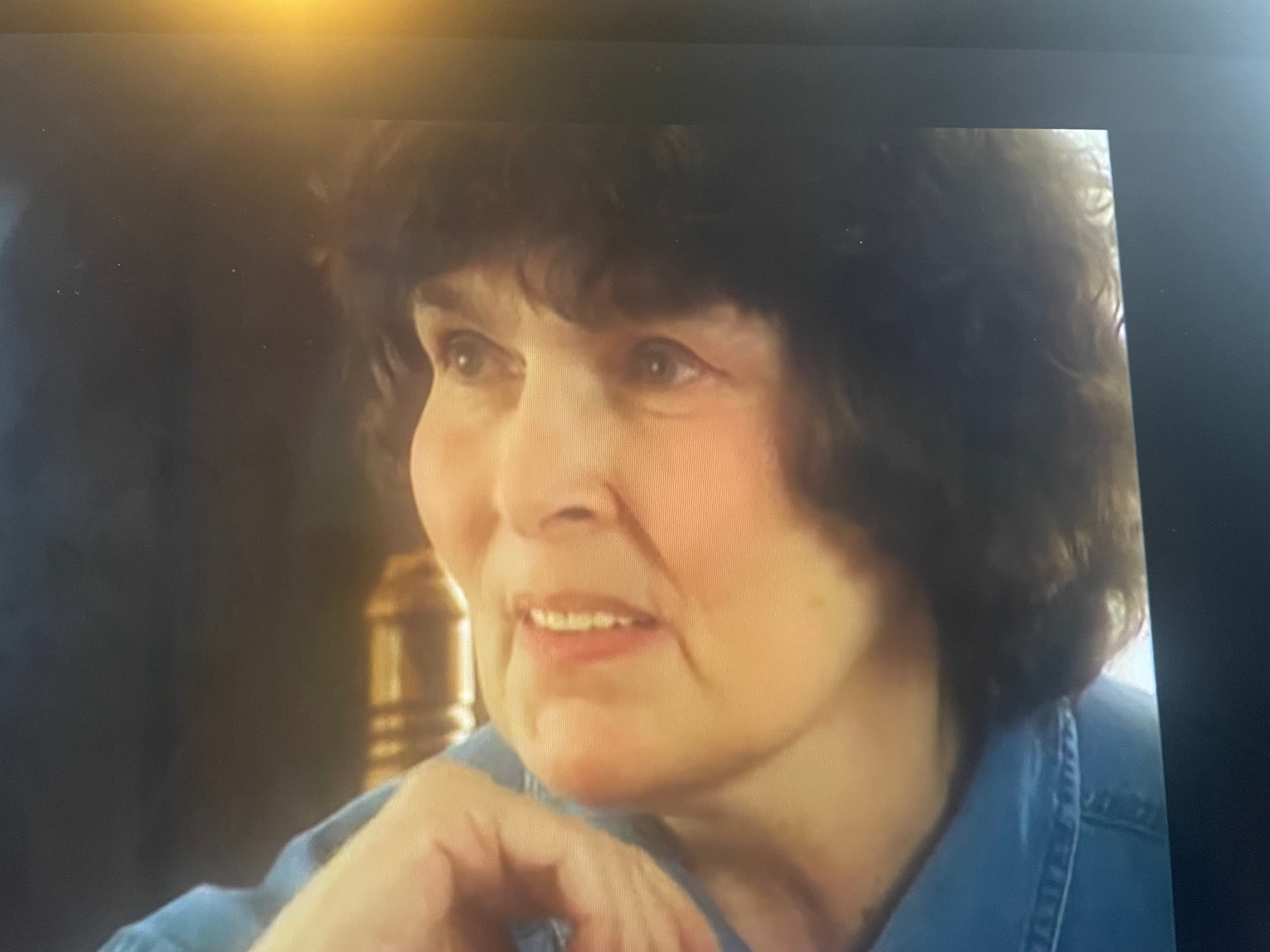
In the end it was Boudro’s testimony that sealed the murderers’ fates. Her vivid descriptions of the “pinging” of the metal bat off the hunters’ skulls; the sound of Tyll’s skull splooshing open like a smashed pumpkin, and the brothers laughing derisively when they saw that Ognjan had peed his jeans in fear were compelling details that bolstered her credibility.
The jury needed less than three hours of deliberation: Guilty.
Duvall Paranoia
On a cold November day, the men were sentenced to life in prison in a court proceeding before the victims’ families and several of the Duvalls’ brothers. Security was tight.
Because it happened to be on a Friday afternoon, I packed Karen and the dogs in the car and drove to the sentencing. She would watch with me, then we would continue to the family “Up North” cottage where I would file my story.
Sitting in the courtroom I began to worry about the dogs. The Duvall family knew me, and I assumed they read my stories. I had never felt threatened. But, I remembered Boudro’s testimony about the killing of her dogs. Could they, would they….?
We checked on the dogs a couple times, just to be sure. It occurred to me that even now, two decades removed from the murders the Duvall paranoia had affected me too.
Both Bronco and Pendergast told me they know there are other brothers and perhaps friends guilty of the murders and/or coverup, but Boudro could only positively identify Coco and J.R. They believe the hunters’ bodies were eaten by the Duvalls’ pigs after possibly being run through a woodchipper; and the truck and gear chopped up in junkyards owned or frequented by the brothers. There was likely a previous altercation between the hunters and the brothers that precipitated the events in and outside the Linkers Lodge bar.
Both Pendergast and Bronco Lesneski are retired. But there is no statute of limitations on murder. So if you’re out in the woods this weekend…keep an eye out…just in case.
###
Thank you for being thoughtful about what you said about my grandma, Barb Boudro. I'm the granddaughter they liked to threaten her with. So many reporters paint her in such a negative light...thank you for not being one!
I remember reading the news coverage of the arrest and trial, probably by you, and feeling a chill. We like to think of Michigan's north country as a benign place, not populated by people who would do this--and feeding their victims to the pigs. My hats off to you for doing the original stories, even knowing the risk.